
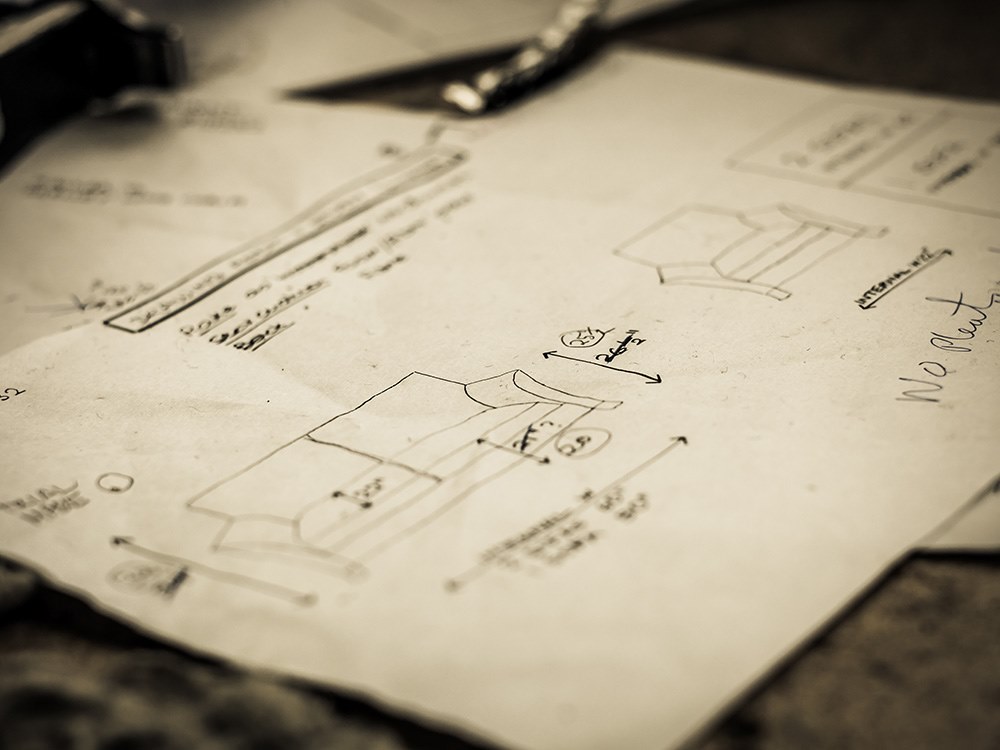
A bespoke modular sofa is a made-to-order seating solution designed around your home, not around a manufacturer’s standard size. Before commissioning one, the decisions that matter must go well beyond colour and style. You need to consider room layout, module configuration, access routes, seat comfort, fabric performance and long-term use. The right design makes an awkward room feel considered and proportionate.
The wrong one, commissioned without accurate measurements or honest access planning, can dominate the space or create a costly problem on delivery day. This guide covers what to confirm before you begin.
What Is a Bespoke Modular Sofa?
“Modular” in a bespoke context means the sofa is planned as a series of sections from the outset, each designed in relation to the others. The overall configuration can be shaped around your room, a generous L-shaped sofa or a corner sofa arrangement in an open-plan kitchen-diner, a compact corner with a chaise end in a sitting room, or a straight run of seating against a long wall.
A standard sofa asks you to find a room that fits it. A bespoke modular design, such as those handmade by Westcote Design in Kingham, Oxfordshire, begins with the room, the access route and the household’s comfort requirements.
Is a Bespoke Modular Sofa Right for Your Home?
A bespoke modular sofa is worth considering where a standard sofa would compromise the room layout, comfort requirements or visual brief. It is a more considered route, suited to buyers for whom fit, craftsmanship, and personalisation matter more than immediate availability. The decision is best approached honestly before any planning begins.
When a Bespoke Modular Sofa May Be Right for You
A bespoke design tends to suit homeowners who:
- Have a living room with a bay window, alcove, chimney breast or media wall that a standard sofa cannot work around.
- Are furnishing an open-plan space and want seating to define a zone without closing off the room.
- Find standard sofas consistently too deep, too shallow, too long or too short for their space.
- Have specific comfort requirements, deeper seats for lounging, firmer support for posture, or different preferences across the household.
- Are renovating and want the sofa designed alongside the room rather than fitted into it afterwards.
- Need a handmade modular sofa for a period property, large family room or home with non-standard proportions.
Not sure which configuration would suit your room?
Share your room dimensions, photographs and ideas with Westcote Design to begin the conversation.
The 7 Things to Decide Before Commissioning a Bespoke Modular Sofa
The most successful commissions begin with clear planning. These decisions shape everything else, and all of them are easier to make before production begins than after.
1. Start with the Room, Not the Sofa
Before you consider any sofa shape, measure the room methodically. Record usable wall lengths, the positions of windows, radiators, doors and fireplaces, and the clearance needed to move around the space comfortably. Mark the proposed sofa footprint on the floor, using masking tape or newspaper, and check that it allows sufficient circulation and an appropriate viewing distance from the television.
What to bring to a consultation:
- Basic room dimensions (wall lengths, door heights and widths)
- Photographs from multiple angles
- A rough floor plan, even hand-drawn, is useful
- Images of styles or configurations you like
- Notes on who will use the sofa and how
2. Choose a Configuration That Supports How You Live
A bespoke modular design can be planned in several ways, depending on the room and how you use it:
- Straight layout: well-suited to narrower rooms or where floor space is a priority.
- L-shaped corner arrangement: one of the most versatile modular sofa configurations for open-plan and family rooms.
- Chaise-end sofa: creates a lounging zone without the full visual weight of a corner unit.
- U-shaped arrangement: for larger rooms where the seating needs to anchor a central zone.
- Separated sections can divide an open-plan space without creating a fixed boundary.
3. Check Access Before the Design Is Finalised
Access is one of the most common sources of difficulty in sofa delivery, far easier to plan around before production than after. Measure every point in the delivery route:
- Front door width and height
- Hallway width and clearance at any turns
- Internal door widths between the hallway and the living room
- Staircase width and headroom
- Lift dimensions if you live in a flat
- Parking and delivery vehicle access
Because bespoke modular sofas are built as planned sections, the delivery approach can sometimes be incorporated into the design.
4. Decide How You Want the Sofa to Feel
Comfort is the combined result of seat depth, seat height, back height, arm profile and cushion filling. A deeper seat suits a relaxed, reclined position but may not suit everyone. A higher seat makes sitting and standing easier. In comparison, a lower seat gives a more casual feel.
Back height affects both the visual presence of the sofa and how well supported you feel over longer periods.
Cushion filling has a significant effect on the everyday experience. Westcote Design offers a choice of fillings: soft duck feather, fibre, and foam core with feather or fibre jackets. Feather-based options give a softer, more yielding sit; foam with a fibre jacket provides support with surface softness. The right choice depends on how your household actually uses the sofa and how much maintenance you want to build into the routine.
5. Choose Fabric for Everyday Life, Not Just First Impressions
The fabric that photographs best is not always the one that performs best. Let the household make the decision.
For households with children or pets, a tight, resilient weave typically outperforms a loose or open-textured fabric. Texture also affects hair retention and resistance to surface abrasion. If the room receives direct sunlight, fading is worth considering. If you eat and drink in the living room, ease of cleaning matters as much as appearance.
Plain pale fabrics show marks more readily than broken patterns, heathered weaves or mid-tones.
A velvet and a structured weave both look considered, but wear and clean differently. At Westcote Design, we work with a wide selection of upholstery fabrics. Assess samples at home, in your own room’s light, before committing.
6. Look Beyond the Upholstery at the Construction
The fabric is what you see first. The frame, seat support and cushion construction determine how the sofa holds up over years of daily use. When discussing a bespoke commission, ask about:
- Frame material. Westcote Design uses beech wood frames, a hardwood known for its stability and load-bearing.
- Seat support. Coil spring units distribute weight evenly and maintain support over time without sagging.
- Natural materials. Natural wadding contributes to the overall feel of the upholstered finish.
- Cushion construction. Different fillings age at different rates and require different levels of maintenance.
- Future repairability. A well-built sofa can be reupholstered rather than replaced, an important consideration for long-term value.
7. Plan for Budget, Production and Delivery
The cost of a bespoke modular sofa is shaped by the overall dimensions, number and type of modules, fabric grade, cushion specification, design detailing and delivery requirements. No two commissions are the same.
Lead times vary depending on the complexity of the design and material availability. If the sofa is part of a renovation or house move, discuss your target date early so the production schedule can be planned accordingly. The most useful step at this stage is being clear about priorities. If a particular configuration or fabric specification significantly affects the budget, that conversation is better had before the design is agreed.
What Does the Bespoke Sofa Commissioning Process Look Like?
The process at Westcote Design follows a clear sequence:
- Initial conversation. Discuss the room, how you use it, preferred styles and early budget expectations. Share dimensions, photographs and design references at this stage.
- Room measurements and layout planning. Dimensions are reviewed alongside the proposed configuration and access route. The design takes a specific, workable shape.
- Comfort, fabric and detail selection. Seat depth, back height, cushion filling and upholstery fabric are confirmed. Samples can be assessed at home before any final decision.
- Handmade production. The sofa is made to the agreed specification, using beech wood frames, coil spring units, natural wadding and the chosen filling and fabric.
- Delivery and placement. Westcote Design offers nationwide delivery. Where access has been considered during the design stage, delivery should be a straightforward process.
Ready to commission a bespoke modular sofa?
A bespoke modular sofa is an investment in a seating solution that genuinely fits your space and suits how you live. Unlike a standard sectional, a handmade modular sofa is built entirely around your requirements; you control the seat depth, back height, arm profile, cushion filling and fabric.
The best commissioning decisions happen before production begins, when the room is measured carefully, the access route is confirmed, and fabric is chosen for real use rather than showroom appeal.
At Westcote Design, we’ve been making bespoke furniture in Kingham, Oxfordshire, for over 35 years. Our approach is straightforward: we listen to your room, your household and your vision.
From initial room assessment through handmade production using beech wood frames, coil spring units and natural wadding, every stage is designed around your home. We offer nationwide delivery with access planning built into the design.
Contact us to discuss your requirements. Explore our bespoke sofa collections as your starting point for a made-to-measure design.
Frequently Asked Questions
1. Can a modular sofa be made for an unevenly shaped room?
Yes. Bespoke modular sofas are particularly well-suited to rooms with irregular proportions, alcoves, bay windows, chimney breasts or media walls. The configuration and dimensions are planned around the available space from the outset, so the layout fits the room rather than the other way around.
2. How do I measure for a bespoke modular sofa?
Measure usable wall lengths, door and window positions, and radiator placements. Allow comfortable circulation clearance and mark the proposed footprint on the floor before committing to dimensions. For access planning, measure every door opening, hallway width and staircase in the delivery route before the design is finalised.
3. Will a bespoke sofa fit through a narrow doorway?
Access is best assessed before production, not after. Where access is restricted, design solutions such as bolt-on arms or split frames can sometimes be built into the bespoke modular sofa. Measure the full delivery route and raise any concerns early. Westcote Design can help assess access constraints as part of the commissioning process.
4. What is the best fabric for a family modular sofa?
There is no single answer, but a tight, resilient weave tends to outperform looser fabrics in households with children or pets. A lot of fabrics are now pre-treated with Fibreguard (Stain resistance), which makes cleaning easier and means that liquids don’t sink straight through the fibres. Mid-tone colours with weave variation are more forgiving than pale plains. Always assess samples at home, under your room’s light, against your flooring, before deciding.
5. Is a bespoke modular sofa worth the investment?
For homeowners who need a sofa that genuinely fits the room and suits the household’s comfort preferences, yes. A handmade modular sofa built on a beech frame with coil spring support is made to last and can be reupholstered rather than replaced, which changes the long-term value equation considerably.